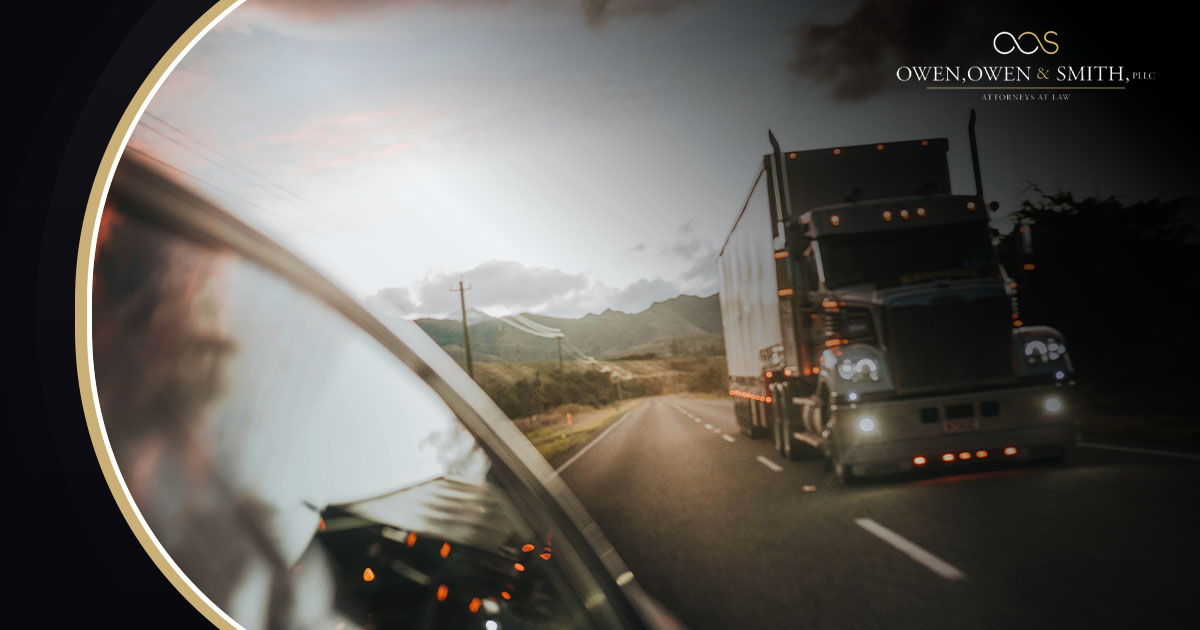
Truck blind spots can contribute to multi-vehicle truck accidents because one missed car can set off a chain reaction across several lanes. It isn’t always a simple lane-change crash between two vehicles.
With a large truck, one blind-spot mistake can trigger panic braking, sudden swerving, side impacts, rear-end crashes, and pileups among nearby drivers.
That’s what makes these crashes so dangerous.
This is especially risky on Mississippi roads like I-10 near Gulfport, I-20, I-55, US 49, and freight corridors around ports, warehouses, construction zones, and distribution centers. Traffic can be tight. Lanes can be crowded.
Trucks may be merging, changing lanes, or moving around slower vehicles. One spatial misjudgment can turn into a multi-car mess fast.
And once several vehicles are involved, everyone may have a different version of what happened. That’s why truck blind spot accidents need a careful reconstruction, not just quick assumptions.
How Blind Spot Errors Trigger Multi-vehicle Pileups
Blind spot errors can lead to multi-vehicle pileups when a truck’s unsafe movement forces surrounding drivers to react all at once.
That’s where the chain reaction begins.
Picture this scenario: a semitruck drifts into the left lane and side-swipes a car. The car spins or swerves into the next lane. A pickup slams on its brakes, and the SUV behind it rear-ends the pickup. Another driver swerves onto the shoulder and hits a barrier. Within seconds, one lane-change mistake has become a multi-vehicle pileup.
That’s why side-swipe truck accidents can cause so much damage. The first impact may not look like a big deal on its own. But the truck’s movement changes the traffic pattern around it.
Smaller vehicles scatter as drivers try to avoid being trapped or pushed under the trailer.
Blind spot pileups often involve:
- Unsafe or unsignaled lane changes
- Forced steering to evade
- Secondary rear-end collisions
- Vehicles getting pushed into barriers or medians
- Rollovers after overcorrection
- Impact with vehicles that never touched the truck
- Contradicting driver claims about who hit who first
That last point really matters because, in chain-reaction crashes, the original mistake can get buried by later, and more severe, impacts. The investigation has to work backward to find the first unsafe movement.
Technology vs Human Error in Blind Spot Accidents
Technology can certainly help reduce blind spot accidents, but it can’t replace a careful driver.
Cameras, sensors, warning systems, mirrors, and lane-departure alerts can help, but they only work when drivers use them correctly. Commercial truck lane-change laws and basic safety rules still require drivers to ensure a lane change can be made safely.
A warning light or camera angle doesn’t change that.
If the driver rushes the maneuver, checks only one mirror, ignores a warning, or assumes the lane is clear, the technology won’t save the situation.
Human error still matters.
This is where trucking company negligence becomes part of your case. A company can’t just install safety technology and call it done. It has to train drivers, inspect equipment, fix broken systems, and enforce safe lane-change policies.
A safety system that no one maintains or understands isn’t much of a safety system.
Determining Liability in Complex Chain Reaction Crashes
Determining liability in complex chain-reaction crashes requires identifying the first unsafe movement and tracing how it caused subsequent impacts.
That can be harder than it sounds.
Multi-vehicle crashes create a lot of confusion. Drivers are shaken. Vehicles may move after impact, and emergency responders may focus on clearing lanes and helping the injured.
That means that the police report may capture part of the story, but not the entire thing.
A proper investigation looks at the layout. Where was each vehicle? Which lane changed first? Did the truck signal? Did the truck enter an occupied lane? Did brake lights appear before or after the side impact? Was another driver following too closely? Did construction, weather, or road design narrow the available space?
Key evidence can include:
- Dashcam and footage from nearby surveillance cameras
- The condition of the truck’s mirrors and cameras
- Black box and event data recorder information
- Electronic Logging Device (ELD) data
- Driver and maintenance logs
- Statements from eyewitnesses
- Skid marks, debris fields, and impact angles
- Cellphone and dispatcher records and recordings
- Police diagrams and expert crash reconstruction
ELD data in accident claims may help show timing, location, movement, and driver hours. It may not prove the blind-spot mistake on its own, but it can help build the timeline. In a chain reaction wreck, the timeline is everything.
Mississippi Comparative Negligence in Trucking Claims
Mississippi comparative negligence affects trucking claims by reducing compensation based on each person’s share of fault, meaning that multiple drivers may be assigned different percentages of responsibility in the same crash. This matters in blind spot pileups because the truck driver may not be the only person blamed.
The truck may have made an unsafe lane change, or another driver was following too closely. A third driver may have been speeding. Someone else may have lingered in the truck’s no-zone.
The result can become a fight over percentages.
For example, if your damages are $500,000 and you’re found 20% at fault, your recovery may be reduced by $100,000. You may still have a claim, but the final amount may change.
That’s why chain reaction accident compensation depends so heavily on the evidence.
Comparative negligence doesn’t make the case unwinnable. It just makes the details more important. Every lane position, mirror check, signal, skid mark, and witness statement can affect the outcome.
Steps to Take After a Multi-Vehicle Truck Wreck
After a multi-vehicle truck crash, your first steps should be to seek medical help if you or others are injured, document the scene, identify the trucking company, and preserve evidence before the crash sequence gets blurred.
These cases can get messy fast, so early action matters.
Don’t assume the first police report tells the whole story. Officers may not have access to all of the necessary information. They may also be dealing with blocked lanes, injured people, and multiple vehicles instead of looking for evidence.
So, it’s likely up to you to protect the evidence while it still exists.
Those first steps usually look something like this:
- Call 911 and request any necessary medical help immediately
- Get pictures of any visible injuries
- Take photos of every vehicle involved, not just yours
- Try to get pictures or video of lane positions, debris, skid marks, signage, as well as road and weather conditions
- Get names and contact information from eyewitnesses and other drivers
- Be sure to identify the trucking company, DOT number, and trailer number
- Save any dashcam, surveillance, black box, and ELD evidence
- Speak with one of our Gulfport truck accident lawyers before making any broad statements to insurers
- Avoid posting details of the accident or your condition on social media
In a multi-vehicle truck wreck, the most obvious impact may not be the first one. But the first one may be the key to the whole case.
Owen, Owen & Smith PLLC Advocates for Truck Accident Victims
Truck blind spot accidents are not just visibility problems. They’re chain reaction problems.
At Owen, Owen & Smith PLLC, we understand that, in Mississippi, where comparative negligence can reduce compensation based on fault percentages, the details can change everything. Every signal, mirror check, lane position, skid mark, dashcam clip, and witness statement matters.
If you’ve suffered injuries or loss in a truck-involved accident, our experienced legal professionals are ready to clear up the confusion and help you seek justice.
Give us a call today.