
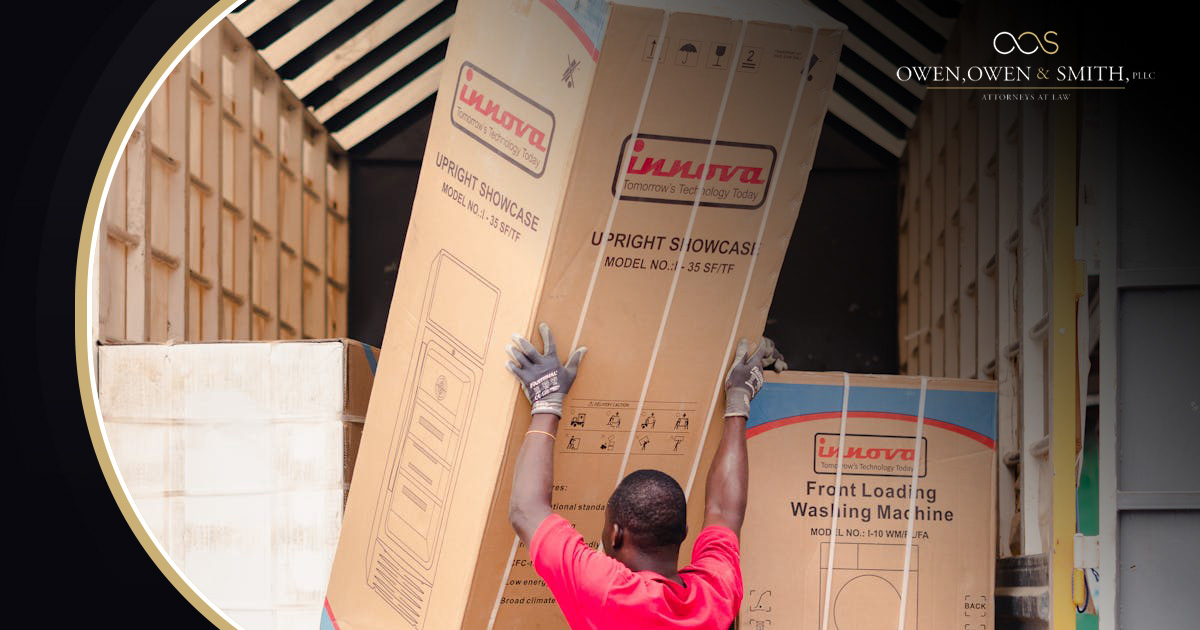
When you’re driving down a busy Mississippi highway, the last thing you expect is a piece of cargo from a passing tractor-trailer flying into your path. But unsecured loads aren’t just a minor hazard. They can cause serious, life-changing accidents in an instant.
Can a tractor-trailer’s unsecured load really cause a wreck? The answer is yes.
Unfortunately, these incidents are more common than many drivers realize.
From shifting freight that throws a truck into a jackknife spin to loose debris that turns into a dangerous projectile, the risks are real, and the consequences can be severe. Let’s break down who may be held responsible, the laws designed to prevent these crashes, and what steps you can take if you or a loved one is injured in one of these big rig accidents.
The Dangers of Unsecured Cargo on Mississippi Highways
Tractor-trailers are massive machines carrying thousands of pounds of freight. Unfortunately, physics does not cut them any slack. When a load isn’t properly secured, it can shift or even fall off. That sudden movement changes how the truck handles. In turn, it is harder to steer or stop. sending debris flying into the paths of nearby cars.
For passenger vehicles, the risks are immediate and serious:
- Loss of control: Drivers swerving to avoid falling cargo can collide with other vehicles or roadside objects.
- Direct impact: Boxes, machinery, or other freight can strike a car at highway speeds, causing catastrophic damage.
- Multi-vehicle accidents: Debris in a lane can trigger chain-reaction crashes.
In Gulfport, highways like I-10 and US-49 are busy and congested. These accidents happen fast and leave little room to react.
Common Types of Unsecured Load Accidents
Unsecured cargo can create all sorts of dangerous situations on Gulfport roads. They happen in ways that catch drivers completely off guard. Some of the most frequent scenarios include:
- Road debris collisions: Boxes, crates, or loose materials can tumble off a trailer and suddenly appear in your lane. This can force drivers to swerve or slam on their brakes. These moments of panic can quickly escalate into crashes.
- Cargo shifts causing jackknife accidents: When freight slides to one side, it can swing the trailer out at a sharp angle. This can cause jackknife crashes. These are terrifying because they can block multiple lanes in an instant.
- Liquid surges in tankers: Partially filled tankers can experience sloshing. This happens when the liquid inside shifts during turns or with sudden stops. This can throw off the truck’s balance and even trigger rollovers.
These types of incidents don’t stop with one vehicle. A single unsecured load can spark multi-car pileups, especially on busy highways like I-10 or US-49. For drivers in Gulfport, a split second of misjudgment caused by flying or shifting cargo can have life-altering consequences.
Federal and State Regulations for Cargo Securement
Tractor-trailers are heavily regulated. And there is a good reason for that. The Federal Motor Carrier Safety Administration (FMCSA) has strict rules on how cargo must be secured, balanced, and protected to prevent it from shifting or falling during transport.
These rules cover everything from the type and number of tie-downs to the forces they must withstand in forward, backward, and sideways directions.
Mississippi adds its own layer of rules for commercial trucks traveling on state roads. That means drivers and trucking companies need to juggle federal and local standards at the same time.
Breaking these safety requirements can be treated as negligence per se in personal injury cases. That means that if a truck’s unsecured load causes a crash, violating these regulations can automatically establish that the trucker or trucking company acted negligently. In turn, that makes it easier for victims to pursue compensation.
Who Is Liable for a Falling Load Accident?
When a truck’s load isn’t secured properly, figuring out who’s responsible is not always easy. Liability can fall on several parties, including:
- The truck driver, if they failed to follow proper loading or inspection procedures.
- The trucking company, especially if it cut corners on safety training or ignored maintenance and securement rules.
- Third-party loading or logistics contractors, who might have improperly stacked, tied down, or balanced the cargo.
At Owen, Owen & Smith, we dig into the entire chain of responsibility. That means reviewing driver logs, pre-trip inspection reports, and loading records. Sometimes, we even bring in accident reconstruction experts to see exactly how the cargo shift happened. By tracing every step, we can hold all liable parties accountable, not just the person behind the wheel.
For Gulfport drivers, this thorough investigation can make the difference between a minimal payout and full compensation for injuries, damages, and lost time.
How a Gulfport Truck Accident Lawyer Can Help
Large trucking companies have teams of lawyers and insurance adjusters with the goal of minimizing payouts. At Owen, Owen & Smith, we’ve spent years navigating these cases, from investigating shifting cargo and analyzing pre-trip inspections to securing black box data and driver logs.
If you or a loved one has been hurt by a tractor-trailer’s unsecured load, we’ll guide you through your options.
Frequently Asked Questions About Tractor Trailers
Q1: What are the FMCSA rules for securing a tractor-trailer load?
A: The Federal Motor Carrier Safety Administration (FMCSA) requires that cargo be secured using specific tie-downs, shoring bars, or dunnage to prevent shifting or falling. These rules dictate that the securement system must withstand specific amounts of force in forward, rearward, and lateral directions. Failure to meet these standards often serves as primary evidence of negligence in a personal injury lawsuit.
Q2: Can I sue if I hit debris that fell off a truck?
A: Yes, you can file a claim if you can prove the debris originated from a specific commercial vehicle due to improper securement. Because these cases often involve identifying a ‘hit and run’ load, it is vital to gather witness statements or dashcam footage immediately. A skilled attorney can help subpoena trucking logs to identify the responsible party even if they didn’t stop at the scene.
Q3: How do I prove a truck’s load was improperly secured?
A: Proving an unsecured load typically involves analyzing post-accident photos, reviewing the driver’s pre-trip inspection reports, and examining the cargo securement devices used. Expert accident reconstructors can often determine if the load was balanced and tied down according to industry standards. Owen, Owen & Smith uses these technical insights to build a strong case for our clients.